“The red-rock forest may seem hellish to us, but it is a refuge to its flora…it is the obdurate physical (and chemical) adversity of things such as peridotite bedrock which often drives life to its most surprising transformations”
David Rains Wallace (1985) The Klamath Knot: Explorations of Myth and Evolution
What we do…
We’re a group of biologists fascinated by life on rock—plants, lichens, microbes, and the many other organisms that make a living on (and in) rocky outcrops in California and beyond. And yes: we love hanging out on rocks. The harsher and more “extreme” the setting, the better.
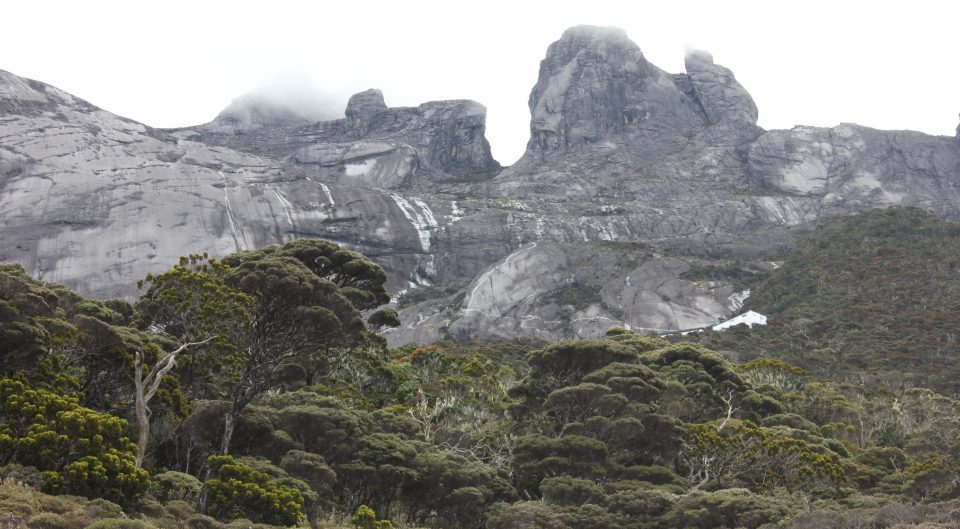
Many rock types weather into soils that are notoriously challenging for plant growth. These include ultramafics (e.g., serpentinite, peridotite), mafic rocks (e.g., gabbro), and carbonate-rich substrates (e.g., limestone, dolomite, gypsum). Soils on these outcrops often feature nutrient imbalances, toxic elements, and difficult physical structure—conditions that exclude most plants. The species that do persist (including many lichens) are natural “extremophiles,” and studying them—along with their ecological partners such as pollinators, seed dispersers, mycorrhizal fungi, herbivores, pathogens, and other associates—offers powerful insight into how biodiversity is generated and maintained. These systems also provide excellent models for applied work in conservation and restoration, as well as phytotechnologies such as phytoremediation and phytomining.
Our curiosity extends beyond natural outcrops. We’re equally at home in human-altered “extreme” environments: mine tailings, rock piles, industrial waste sites, and bird-nesting areas where guano-derived soils can be highly acidic, nutrient-rich, and sometimes elevated in heavy metals. We’ll also gladly detour to alkaline flats, salt flats, and any habitat defined by unusual chemistry—whether naturally occurring or shaped by human activity—because these substrates often host distinctive plant communities and their associated biota.
If you’re excited by plant communities on rock outcrops—or by life in any kind of “extreme” soil habitat—geoecology offers a rich, interdisciplinary framework for exploring these systems. The field integrates perspectives from taxonomy (plants, lichens, and their associates), ecology, physiology and genetics, biochemistry, evolution, soils and geology, and conservation and restoration. Our work spans a wide range of harsh-substrate environments and includes projects in California, Maine, South Africa, Russia, Sri Lanka, and beyond, driven by questions about how organisms persist, diversify, and interact under chemically and physically challenging conditions.
You can explore research on life in harsh substrates conducted by my undergraduate and graduate students on my publications page.
If you’d like to learn more about geoecological research or discuss questions related to extreme soil habitats, feel free to get in touch by email @ nishi.rajakaruna@gmail.com.
 Nishanta "Nishi" Rajakaruna